
Masonry Chimney Repair & Reconstruction: Doing It Right the First Time
A masonry chimney is one of the most exposed and vulnerable components of a home. In Ottawa’s climate, freeze-thaw cycles, heavy precipitation, and wide temperature swings cause chimneys to deteriorate faster than most homeowners expect. Proper repair and reconstruction isn’t just about aesthetics; it’s about structural integrity, fire safety, and strict compliance with the Ontario Building Code (OBC) and National Building Code of Canada (NBC).
This article outlines how professional masonry chimney work in Ottawa should be approached, what typically goes wrong, and how to ensure your chimney is rebuilt to last.
2026
Why Chimneys Fail
Most chimney deterioration follows predictable patterns:
1. Water Ingress
Water is the primary cause of chimney failure. It enters through cracked crowns, failed mortar joints, or missing caps, then expands during freeze-thaw cycles.
2. Crown Failure
Improperly built crowns (flat, thin, or without drip edges) allow water to run directly into the masonry below. This is clearly evident in the typical top-down pattern of deterioration.
3. Mortar Joint Deterioration
Older chimneys often have lime-based mortar that erodes over time, leading to loose brick and instability.
4. Liner & Airspace Issues
Missing or compromised flue liners and improper clearance between liner and masonry, create safety hazards and accelerate internal deterioration.
5. Improper Flashing
Poorly installed or aging flashing at the roofline allows water to enter at one of the most critical junctions.
What Proper Chimney Repair Looks Like
Targeted Repairs (When Structure Is Still Sound)
If caught early, some chimneys can be restored without full reconstruction:
Repointing deteriorated mortar joints
Crown repair or replacement with proper slope and drip edge
Partial rebuilds above the roofline
Depending on how difficult it is to safely access the chimney, we often recommend more than just the minimum repair for long-term cost efficiency.
When Reconstruction Is Required
Full or partial reconstruction becomes necessary when:
The chimney is leaning or structurally compromised
Brick units are extensively spalled or delaminated
Mortar loss exceeds safe thresholds
The chimney was built incorrectly to begin with
In these cases, rebuilding is not optional. It’s the only durable solution.
Key Technical Requirements
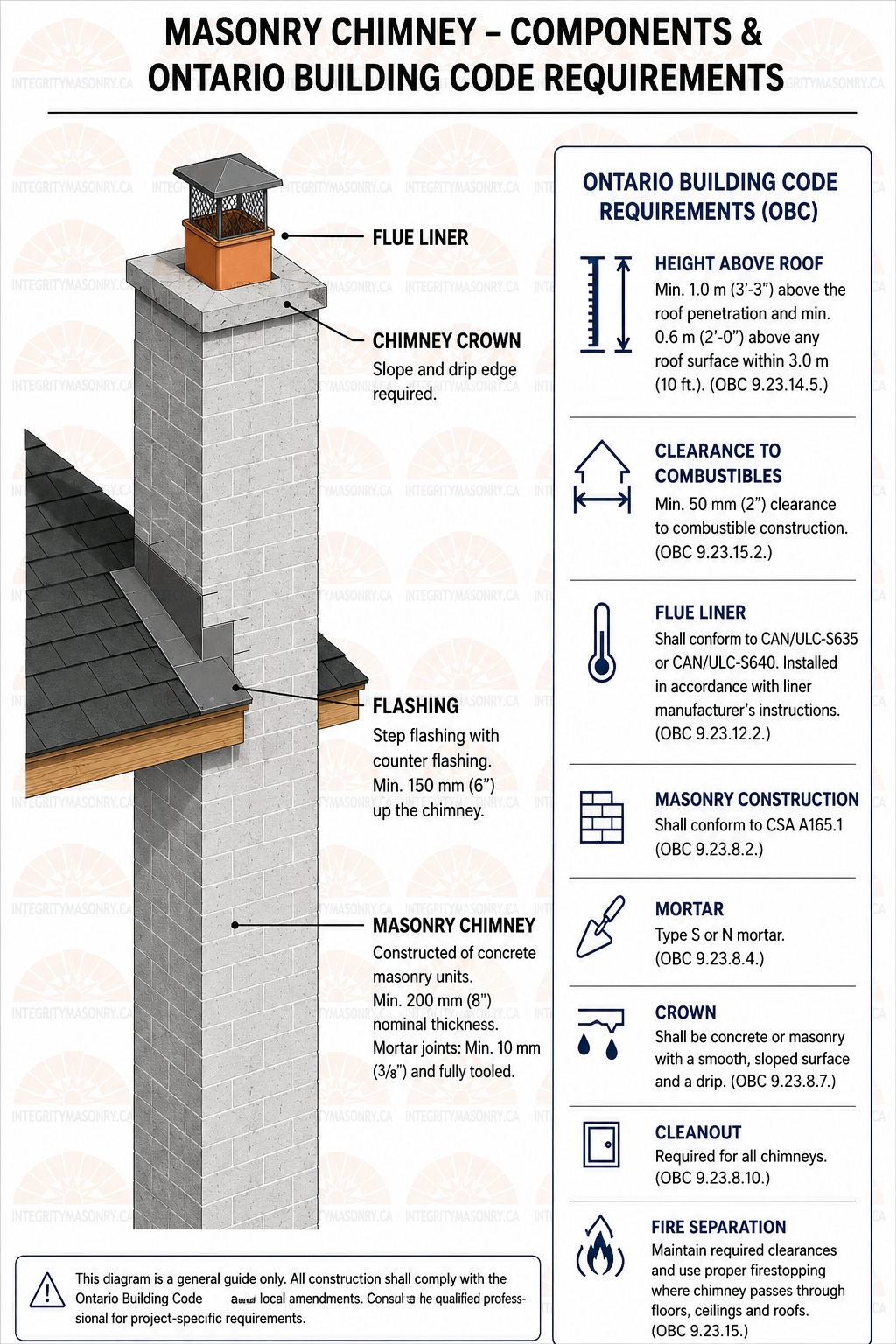
Proper chimney reconstruction isn’t guesswork. It must align with building code provisions governing clearance, support, and durability.
1. Chimney Height & Clearance
There are minimum termination height requirements depending on several variables. A properly trained and Red Seal certified mason should be very familiar with all these rules.
2. Chimney Crown Construction
A compliant chimney crown should include:
Minimum slope: 1/4" per foot (≈21 mm per 300 mm)
Drip edge: Projection minimum 25mm beyond the chimney face below
Material: Reinforced concrete or properly fabricated metal
Function: Sheds water away from the masonry walls and the interior of the chimney
Flat or undersized crowns are one of the most common failure points we see.
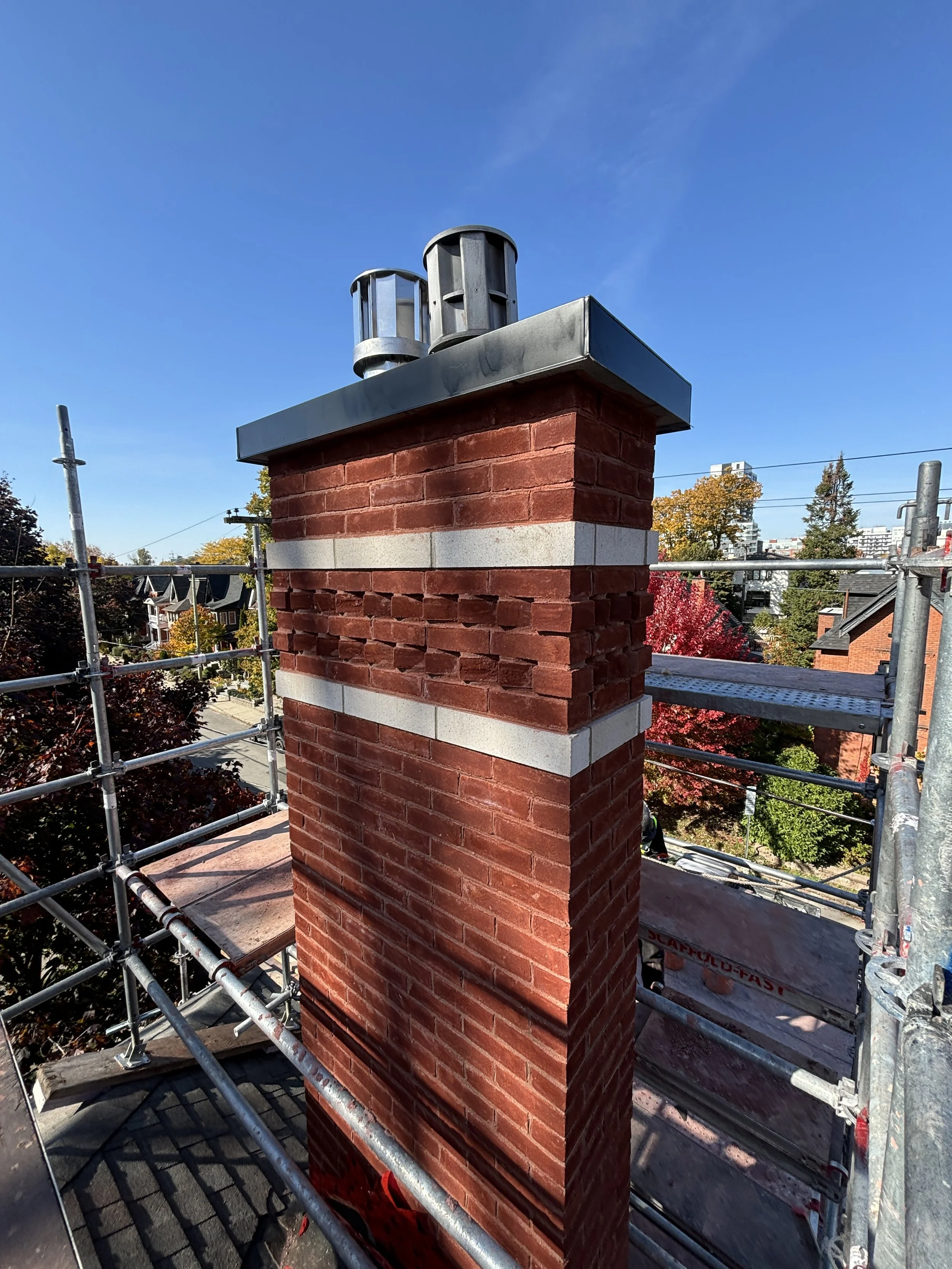
One of our chimney rebuilds in the Glebe, where decorative bands of stone were incorporated along with “dog tooth” brickwork
3. Flue Liner & Airspace
The minimum airspace between the flue liner and masonry walls is 10mm. For wood burning appliances like fireplaces, the mortar between segments of flue liner must be refractory grade, high heat mortar.
The airspace must remain clear (no mortar bridging)
Allows for thermal expansion
Prevents cracking and heat transfer
Improper liner installation is both a durability and fire risk issue.
4. Masonry Construction Quality
Brick/block/stone must be sound and plumb.
Mortar must be appropriate for exposure conditions
Joints must be fully filled and tooled for water resistance
Best Practice Approach to Reconstruction
At Integrity Masonry, chimney rebuilds follow a disciplined sequence:
Assessment & Tear-Down
Remove all compromised material.Original Masonry Unit Identification
Ensure replacement brick is the nearest possible match when original units are no longer manufactured.Rebuild with Proper Bonding
Maintain structural integrity and alignment.Install or Replace Flue Liner Sections
Maintain correct clearance and continuity.Construct Proper Crown
Sloped, reinforced, with a functional drip edge.Raincap Installation
Protect against water and animal entry.

One of our chimney rebuilds with a decorative corbel pattern
Common Contractor Mistakes to Avoid
Homeowners should be cautious of:
Rebuilding only the visible portion while ignoring underlying issues
Filling liner airspace with mortar
Using window sill units with a “mortar wash” instead of proper crown construction
Ignoring code-required clearances
Failing to protect the surrounding roof, eaves, and adjacent property
Mismatching replacement unit size and appearance
Unsafe set up and operations
These shortcuts lead to premature failure and sometimes worse.
Repair vs. Rebuild: Making the Right Call
A professional assessment should determine:
Extent of deterioration
Safety concerns
Remaining service life
Cost comparison (repair vs rebuild)
In many cases, repeated minor repairs cost more over time than a proper rebuild done once.
Final Thoughts
A masonry chimney is not just a decorative feature, it’s a critical building system. Proper repair and reconstruction require:
Building Code compliance
Understanding the moisture control systems that preserve the life of a chimney
Precision masonry workmanship
Done correctly, a rebuilt chimney should last decades.
Need an Assessment?
If your chimney shows signs of deterioration like cracking, leaning, spalling brick, or water entry, it's worth addressing before the damage escalates.
Integrity Masonry specializes in chimney repair and reconstruction throughout Ottawa, with a focus on doing the work properly, safely, and to code. Our Red Seal Certified masons are ready to help.
Reach out and Request a Quote for a detailed inspection and clear recommendation.
